

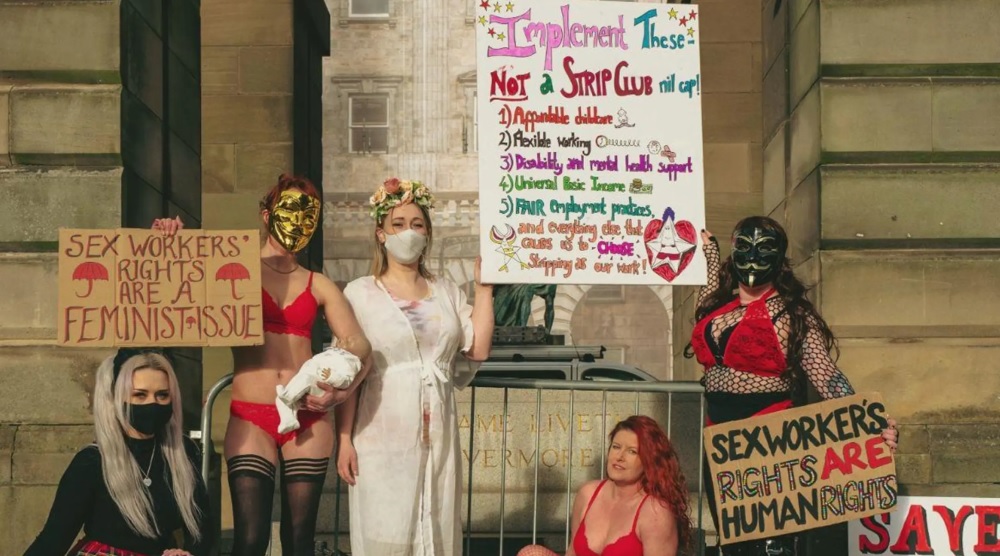
When the general public envisions the modern labor movement, the imagery is usually quite specific. We picture warehouse employees walking off the floor, baristas organizing behind coffee counters, or writers picketing outside major studio lots. The public consciousness rarely extends this framework to the escort industry. For decades, sex work has been viewed through the polarized lenses of morality, criminal justice, or hyper-glamorized media narratives. Yet, stripping away the societal stigma reveals a stark, fundamental reality: sex work is labor. It involves the exchange of time, physical effort, and emotional energy for financial compensation.
Like any other sector of the economy, the escort industry operates on the principles of supply and demand, client management, and occupational risk. However, because this labor is heavily marginalized and frequently criminalized, the workers who power the industry are systematically denied the baseline protections afforded to the rest of the workforce. In response to escalating physical dangers, financial discrimination, and the unchecked power of digital platforms, independent escorts are increasingly turning to the bedrock strategy of the working class: collective organizing and unionization.
The Unique Vulnerabilities of Unregulated Labor
To understand the urgent push for collective bargaining, one must first examine the daily realities of working in an entirely unregulated environment. The vast majority of modern escorts operate as independent contractors. In a traditional freelance career, a contractor relies on civil law to enforce contracts, ensure payment, and maintain a safe working environment. Escorts do not have this luxury.
Wage Theft and Recourse
If a freelance graphic designer delivers a project and the client refuses to pay, the designer can take the client to small claims court. If a client attempts to extort an escort or simply leaves without paying for the booked time, the escort has virtually zero legal recourse. Reporting wage theft to law enforcement essentially requires the worker to confess to a crime or expose themselves to intense legal scrutiny and moral judgment. This dynamic weaponizes the law against the worker, effectively giving predatory clients a free pass to steal labor.
The Absence of Occupational Safety Standards
Furthermore, there is no equivalent to the Occupational Safety and Health Administration (OSHA) for sex workers. Safety protocols are entirely self-funded and self-managed. Independent escorts spend countless unpaid hours verifying client identities, maintaining secure communication channels, and sharing safety alerts within private networks. When an industry is pushed into the shadows, workplace violence ceases to be treated as a systemic labor issue and is instead dismissed as an inevitable occupational hazard.
The Rise of Algorithmic Middle Management
The advent of the internet fundamentally transformed the escort industry. It allowed workers to bypass traditional, often exploitative third-party management structures—such as agencies or pimps—and transition into independent business owners. Digital advertising boards and booking platforms empowered escorts to set their own rates, establish explicit boundaries, and directly screen their clientele.
However, this digital independence was short-lived. In recent years, sweeping internet legislation and corporate policy shifts have resulted in massive digital crackdowns. Under the guise of combating severe crimes like human trafficking, legislation severely penalized digital platforms that hosted sex work-related content. In response, web hosts, social media networks, and payment processors engaged in aggressive financial de-risking, purging anyone even tangentially related to the adult industry.
Overnight, independent escorts found themselves deplatformed. They lost access to their client bases, their advertising channels, and their payment gateways without any warning or grievance process. Today, these digital platforms function as a highly oppressive form of algorithmic middle management. They dictate how a worker can advertise, what language they can use, and how they can get paid, while deliberately avoiding any of the liabilities or responsibilities of an actual employer.
What Collective Bargaining Looks Like for Escorts
Faced with a hostile legal system and monopolistic tech platforms, the escort industry is recognizing that individual exceptionalism is no longer enough to survive. The push for unionization is gaining momentum, though it looks distinctly different from traditional labor unions due to the unique constraints of the profession.
Mutual Aid as the Foundation of Organizing
Because formal, state-recognized unionization is currently out of reach for most independent contractors, sex workers have historically relied on mutual aid networks. These networks are the earliest evolutionary stage of a labor union. Escorts pool resources to create emergency bail funds, cover rent for colleagues who have been deplatformed, and maintain highly encrypted “bad date” lists to warn each other about violent or extortionate clients. This collective defense mechanism is the lifeblood of the industry, proving that sex workers possess a deep, inherent capacity for organized solidarity.
The Push for Formal Guilds and Coalitions
The modern movement is working to transition these informal networks into recognized trade guilds and coalitions. These organizations are lobbying for critical labor rights that extend beyond basic decriminalization. They are demanding access to traditional banking services without the threat of account closures, the right to safe indoor workspaces, and the ability to purchase comprehensive health and liability insurance without facing discriminatory industry exclusions. By framing their demands around labor rights rather than morality, these coalitions are forcing lawmakers and human rights organizations to engage with them as legitimate workers.
Structural and Legal Barriers to Unionization
The path to formal unionization is heavily obstructed by antiquated labor laws. The National Labor Relations Act (NLRA) in the United States protects the rights of employees to organize, but it explicitly excludes independent contractors. Because almost all escorts operate independently, they are legally barred from forming a federally recognized union that can force a bargaining table.
Even more challenging is the threat of antitrust litigation. When traditional employees strike to demand higher wages, it is protected collective action. But when independent contractors—who the government views as distinct, competing business entities—collaborate to establish minimum baseline pricing or standardized safety protocols, they risk being prosecuted for price-fixing and collusion under federal antitrust laws.
This legal paradox places escorts in an impossible bind. They are treated as independent businesses when it is convenient for the state to deny them labor protections, but they are treated as criminals when they attempt to exercise the standard rights of a business owner.
Decriminalization as a Prerequisite for Labor Rights
Ultimately, the ceiling for labor organizing in the escort industry is determined by the legal status of the work itself. You cannot successfully unionize a profession that the state actively seeks to eradicate. This is why the labor movement within the escort industry is inextricably linked to the push for full decriminalization.
Decriminalization is fundamentally different from legalization. Legalization often introduces heavy state regulation, licensing fees, and zoning restrictions that push the most marginalized workers—such as undocumented immigrants or transgender individuals—further underground. Decriminalization simply removes criminal penalties from the consensual exchange of sexual services for money. It is the necessary first step to bringing the industry into the daylight, allowing workers to report violence, enforce contracts, and organize without the looming threat of arrest.
The struggle for labor rights in the escort industry is one of the most vital, yet overlooked, frontiers of the modern labor movement. It challenges society to abandon its moral policing and confront a basic economic reality: no worker should have to accept violence, financial exclusion, or exploitation as a condition of their employment. By fighting for unionization, collective power, and legal recognition, escorts are not just demanding better working conditions; they are demanding the basic human dignity that every worker fundamentally deserves.